

The exotic car market has proven to be one of the most naturally aligned sectors for cryptocurrency adoption. The overlap between crypto wealth and automotive passion is well documented — from early Bitcoin adopders commissioning bespoke Lamborghinis to hedge fund managers settling seven-figure supercar invoices in Ethereum. Today, the infrastructure for buying luxury automobiles in cryptocurrency is extensive, spanning manufacturer-level acceptance to specialist dealerships stocking the world’s most coveted marques.
Manufacturers and Dealers Accepting Cryptocurrency
Ferrari (USA)
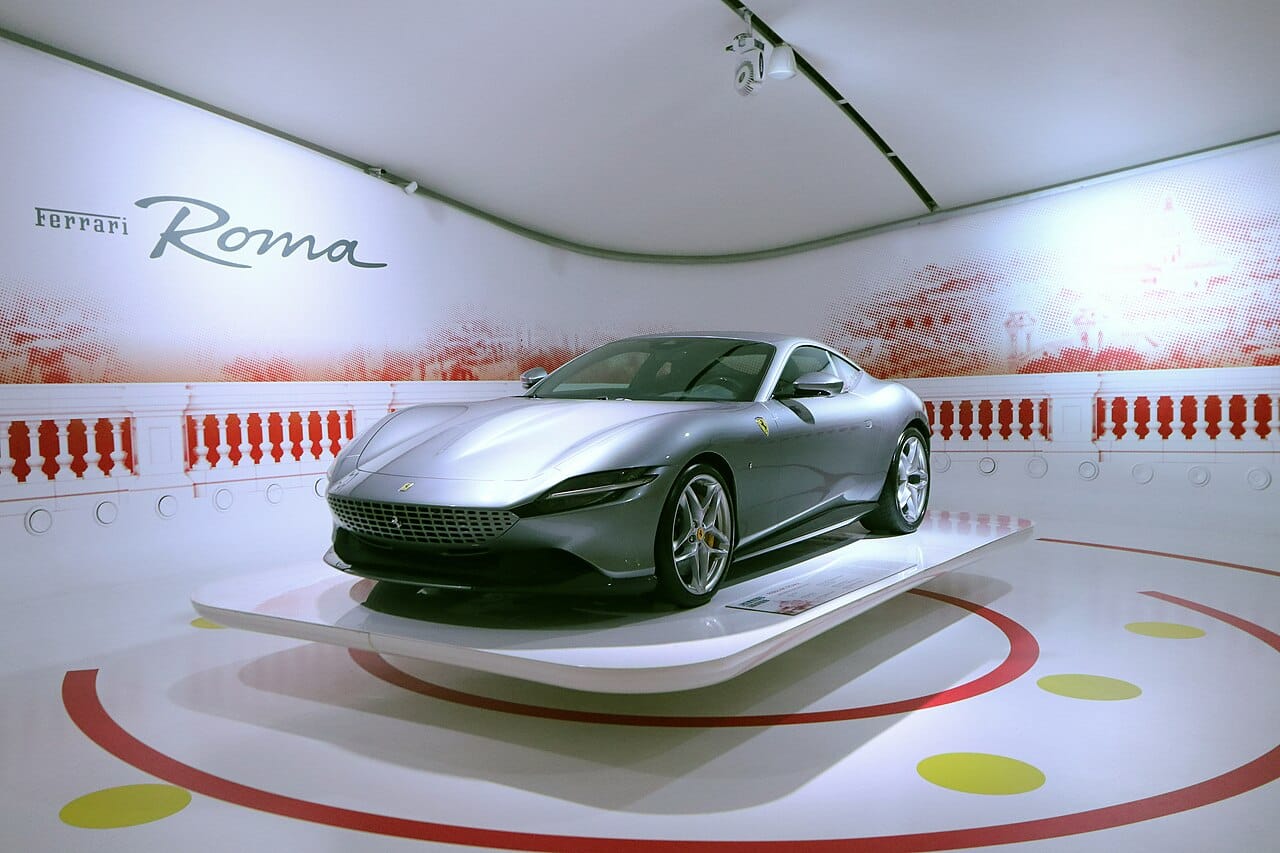
Ferrari became one of the most high-profile luxury manufacturers to accept cryptocurrency when it enabled Bitcoin, Ethereum, and USD Coin payments across its U.S. dealerships through a partnership with BitPay. The initiative followed strong demand from North American customers who wished to purchase Ferrari vehicles using digital asset wealth. Buyers can now walk into a participating Ferrari dealership and complete a purchase in cryptocurrency with the same ease as a traditional transaction. Visit: ferrari.com
Lamborghini Paramus
Lamborghini Paramus in New Jersey was among the first Lamborghini dealerships to formally offer cryptocurrency payment options, accepting Bitcoin, Ethereum, and other major digital assets for the purchase of new and pre-owned Lamborghini vehicles. For collectors eyeing an Urus Performante or a limited-edition Revuelto, this is one of the most direct paths to crypto-funded supercar ownership. Visit: lamborghiniparamus.com
Earth MotorCars
Texas-based Earth MotorCars operates one of the most comprehensive crypto-friendly inventories in the exotic car sector, stocking Ferrari, Rolls-Royce, Bentley, Mercedes-Benz, and Lamborghini vehicles with Bitcoin and Ethereum payment options powered by BitPay. All crypto-purchased vehicles come with a one-year limited powertrain warranty, and the dealership offers blockchain verification of transactions for buyers who require an immutable transaction record. Visit: earthmotorcars.com
Chicago Motor Cars
Chicago Motor Cars offers Bitcoin and BitPay-supported cryptocurrency payments across its inventory of premium and exotic vehicles. The dealership’s integration allows buyers to complete transactions in their preferred digital asset without the multi-day delays associated with traditional bank transfers — a significant advantage for time-sensitive acquisitions. Visit: chicagomotorcars.com
Investment-Grade Automobiles and Crypto
For buyers treating exotic automobiles as investment assets — a category that has grown substantially as classic and limited-production vehicles have outperformed traditional markets — cryptocurrency offers a natural pairing. Both asset classes share characteristics: scarcity, global demand, and value that transcends geographic borders. Platforms like BitCars specialize specifically in investment-grade vehicles — Ferrari 250s, rare Porsches, limited-edition hypercars — purchasable entirely in Bitcoin and major cryptocurrencies.
The process for a crypto car purchase mirrors a conventional transaction in most respects: the buyer selects a vehicle, agrees on price, and receives a payment invoice with a locked exchange rate (typically valid for 30-90 minutes). Funds are transferred, confirmed on-chain, and the keys are handed over. For buyers outside the U.S., international wire alternatives make crypto particularly attractive — eliminating SWIFT delays and currency conversion costs in a single transaction.
The Verified Dealerships: Where to Buy in Crypto Today
Al Habtoor Motors (Dubai) — Ferrari & Maserati
Accepted crypto: Bitcoin (BTC), Ethereum (ETH) via VARA-licensed intermediary
Inventory: New Ferrari, Maserati; pre-owned multi-brand
Location: Sheikh Zayed Road, Dubai
Website: alhabtoor.ae
Last Verified: April 2026
As an authorised Ferrari dealer in the UAE, Al Habtoor Motors operates within the VARA regulatory framework that makes Dubai the global leader in crypto vehicle transactions. Their crypto payment process is fully documented, compliant, and typically completes within 48 hours of payment initiation. The Dubai showroom carries the full Ferrari model range — Roma, Portofino M, SF90 Stradale, 296 GTB — alongside limited allocation models distributed through Maranello’s official channels.
Lamborghini Newport Beach (California)
Accepted crypto: Bitcoin (BTC) via BitPay partnership
Inventory: New Lamborghini, pre-owned luxury and supercar
Location: 1600 Jamboree Rd, Newport Beach, CA 92660
Website: lamborghinineportbeach.com
Last Verified: April 2026
Lamborghini Newport Beach gained significant attention as one of the first US Lamborghini dealers to officially accept Bitcoin. Their BitPay integration allows BTC settlement for any vehicle in stock, with rates locked at time of payment initiation. Californian buyers benefit from no state restriction on crypto vehicle purchases, though the capital gains implications of spending appreciated BTC require advance tax planning.
Rolls-Royce Motor Cars Dubai
Accepted crypto: Bitcoin and Ethereum via VARA-licensed payment processor
Inventory: Full Rolls-Royce range including bespoke commission orders
Location: Abu Dhabi Road, Dubai Showroom
Website: rolls-roycemotorcars-dubai.com
Last Verified: April 2026
The Dubai Rolls-Royce showroom serves one of the highest-concentration UHNW markets in the world. With Phantom priced from AED 1.8M, Ghost from AED 1.1M, and Cullinan from AED 1.2M, Rolls-Royce Dubai has become a significant beneficiary of crypto wealth deployment. Their bespoke commissioning service — the Rolls-Royce Bespoke programme — allows commission of entirely custom vehicles with crypto settlement applied to the commission deposit.
Investment Grade: Which Supercars Appreciate in Bitcoin Terms
Most supercars depreciate. A small number — characterised by limited production, significant performance milestones, or celebrity provenance — appreciate substantially. Understanding which cars represent genuine stores of value is critical before deploying crypto capital.
Ferrari (Allocation Models): Ferrari deliberately restricts production of its highest-demand models. The Daytona SP3, Monza SP1/SP2, and SF90 XX are all allocation-only vehicles where demand exceeds supply by 5–10x or more. Delivery prices — already above RRP — are treated as the floor; secondary market prices immediately upon delivery are 30–80% higher. Ferrari has used crypto-based allocation systems in certain markets, making early access for established clients a genuine advantage.
Porsche 911 GT3 RS and GT2 RS: The GT division Porsches have a consistent track record of secondary market appreciation. A GT2 RS retailing at approximately $310,000 now trades at $450,000–$600,000. The 911 GT3 RS (Weissach Package) retails at $250,000 and trades at $350,000–$450,000 with minimal ownership history. Porsche’s allocation system means obtaining a GT car at retail requires an established dealer relationship — crypto buyers who transact with Porsche dealers willing to accept BTC gain a meaningful relationship advantage.
McLaren Senna and P1: McLaren’s hypercar lineage — particularly the P1 (375 produced, now worth $2M–$2.5M versus a $1.15M original price) and the Senna (500 produced, trading at $1.2M–$1.8M versus a $990,000 original price) — represents some of the strongest appreciation in the supercar market. Buying a confirmed hypercar at new allocation prices is effectively impossible; acquiring one on the secondary market with Bitcoin via a specialist broker (Kidston, Paul Bader, Frank Dale) is the practical route.
The Complete Purchase Process: Buying a Supercar with Bitcoin
1. Identify the vehicle and confirm crypto acceptance: Not every dealership in every market accepts crypto, even for the same brand. Confirm at the point of initial contact — before you invest time in the purchase process — that the specific dealership can facilitate Bitcoin payment for the specific vehicle you want.
2. Complete KYC/AML verification: Dealerships are required to conduct identity verification and source-of-funds checks for all significant transactions. For vehicles above $100,000, expect a formal AML questionnaire and supporting documentation requirement (exchange records, wallet history, tax declarations). This process typically takes 24–48 hours.
3. Receive payment instructions and lock the rate: The dealership will provide a wallet address and a BTC amount equivalent to the vehicle price at an agreed exchange rate. Most rate locks are valid for 15–30 minutes — have your payment ready to transmit before requesting the payment details.
4. Transmit and confirm: Send the exact BTC amount to the provided address. Most dealers require 3–6 confirmations on-chain before the transaction is considered settled. For high-value vehicles, some dealers prefer a preliminary phone call at the moment of transmission. Retain the transaction hash as your payment receipt.
5. Complete standard purchase formalities: Following payment confirmation, the purchase proceeds identically to any other vehicle transaction — purchase agreement, registration, insurance setup, and delivery or collection. The fact that you paid in Bitcoin has no bearing on the vehicle’s title, registration, or warranty.
Pricing sourced from manufacturer official pricing, Hagerty Valuation Tools, and Cars & Bids auction data. Dealership crypto acceptance verified directly by the Bitcoinionaire editorial team. Last Verified: May 2026.
Investment-Grade Supercars: The Collector Market
The high-performance collector car market has outpaced traditional asset classes over the past decade. The Knight Frank Luxury Investment Index consistently ranks classic and limited-production supercars among the top-performing passion investments globally. Unlike equities, the scarcity model embedded in supercar manufacturing — particularly limited production runs and allocation systems — creates a structural floor under values that is difficult to replicate in other asset categories.
Ferrari: The Allocation and Investment Hierarchy
Ferrari’s collector strategy is built on controlled scarcity. The Prancing Horse manufactures fewer than 14,000 cars annually across all model lines, and invitation-only Icona, SP, and XX programmes command multiples of list price at debut. The Ferrari Daytona SP3, produced in a series of 599 units, was delivered at approximately €2 million yet crossed €4.5 million at private treaty within eighteen months. The Monza SP1 and SP2 similarly appreciated 200–300% above list at auction within two years of delivery.
Access to allocation is tiered by purchase history and relationship depth with official Ferrari dealerships. Collectors who have acquired multiple cars — particularly the 488 Pista, SF90 Stradale, and Roma — and have participated in Ferrari Finali Mondiali or Cavalcade events are prioritised for future Icona and limited-series invitations. Establishing this relationship is the single most valuable long-term investment strategy in the Ferrari ecosystem.
Lamborghini: Revuelto, Urus, and the Sián Legacy
Automobili Lamborghini, under Audi AG/Volkswagen Group ownership, has taken a more aggressive limited-production approach with its V12 flagship succession. The Sián FKP 37, limited to 63 coupes and 19 Roadsters, was sold out prior to public announcement and has traded at 150–180% premiums on the secondary market. The Revuelto, as the first V12 hybrid Lamborghini, launched at approximately €517,000 and carries substantial waiting lists in major markets.
Lamborghini’s crypto acceptance is most advanced through select Middle Eastern and American dealers, where BTC, ETH, and USDC settlements are handled via Bitpay corporate accounts. Lamborghini Newport Beach and Al Habtoor Motors in Dubai both confirm cryptocurrency as a payment option for full vehicle purchase, with transactions structured to comply with local KYC and anti-money-laundering frameworks.
Rolls-Royce: Bespoke Commission and Crypto Settlement
Rolls-Royce Motor Cars operates the most sophisticated personalisation programme in the automotive world. The Bespoke team at Goodwood can accommodate virtually any colour, material, or structural modification request, with commissions regularly exceeding £700,000 for complex builds on the Phantom, Ghost, or Cullinan. The Droptail coachbuilt series — comprising four unique examples — was priced above £25 million per car, each requiring multi-year lead times.
Cryptocurrency settlement for Rolls-Royce vehicles is handled on a dealership-by-dealership basis, with the most established crypto-friendly Rolls-Royce retailers operating in Dubai, Monaco, Beverly Hills, and Singapore. The standard process involves an initial dealer consultation, followed by a Letter of Intent, with the crypto payment — typically BTC or USDC — converted to fiat via an institutional exchange at the point of contract signing to lock in GBP pricing.
Supercar Auction Houses: Where Records Are Made
The premium collector car auction market is dominated by four houses: RM Sotheby’s, Gooding & Company, Bonhams, and Barrett-Jackson. RM Sotheby’s holds the record for the most valuable car ever sold at auction — a 1955 Mercedes-Benz 300 SLR Uhlenhaut Coupé, which achieved €135 million in a private auction in 2022. For contemporary hypercars, RM Sotheby’s and Gooding regularly achieve 20–40% premiums over dealer retail on low-mileage limited-edition examples.
Auction houses do not yet accept direct crypto payment, but collectors routinely fund purchases by first converting BTC or ETH to USD or EUR at institutional exchanges (Coinbase Prime, Kraken Institutional) and wiring within the settlement window — typically 24–72 hours post-hammer. This process is now well-established among family offices and high-net-worth crypto collectors who participate in major sales in Monterey, London, Monaco, and Scottsdale.
Ownership Costs: Insurance, Storage, and Servicing
Acquiring a hypercar is the beginning, not the end, of the financial commitment. Annual insurance for a Ferrari SF90 Stradale or Lamborghini Huracán in the USA typically ranges from $15,000–$35,000 depending on storage location, mileage limitations, and agreed value. Specialist insurers including Hagerty, Chubb Masterpiece, and American Collectors Insurance are preferred for limited-production and collector cars, as they offer agreed value policies that protect full replacement cost without depreciation arguments at claim time.
Secure storage at a premium auto concierge facility — companies like Prestigious Cars Storage in Dubai, Autovault in London, or Canepa Design in California — runs $500–$2,000 per month depending on climate control specification, security systems, and additional services such as battery maintenance and quarterly inspection. For collectors with multiple vehicles, private garages integrated into the residential property are increasingly common in Dubai and Miami, with purpose-built car storage in new-build ultra-prime residences a standard amenity at the $10M+ price point.
Factory servicing costs are significant. Ferrari’s annual maintenance visit for a 12-cylinder model costs $3,000–$7,000, with major engine-out services every 30,000 miles running $15,000–$25,000. Lamborghini service intervals are similar. Rolls-Royce’s approved service network is the most extensive among ultra-luxury marques, with service centres on six continents and a 4-year/unlimited-mileage factory warranty standard on new cars.
Market Outlook: Supercars and the Crypto Wealth Effect
As cryptocurrency market capitalisation has grown through multiple cycles, so too has the correlation between bull market peaks and demand for physical luxury assets. The 2020–2021 crypto bull run corresponded with record used supercar prices and depleted inventory at premium dealers globally. Lamborghini Newport Beach, Symbolic Motor Car Company, and similar US retailers reported record enquiries from crypto-wealthy buyers aged 25–40 — a demographic that was marginal ten years earlier and is now a primary customer segment.
For 2025 and beyond, the structural drivers remain supportive: increasing mainstream adoption of crypto as a store of value, growing dealer infrastructure to accept direct crypto payment, and a manufacturing pipeline at Ferrari, Lamborghini, and McLaren that is structurally constrained by design. The intersection of these forces makes the collector supercar market one of the most compelling luxury asset categories for cryptocurrency-denominated wealth.
Last Verified: May 2026. All pricing and availability data reflects current market conditions as researched by the Bitcoinionaire editorial team.
The Supercar Purchase Process: Step-by-Step for Crypto Buyers
Buying a supercar with cryptocurrency follows a predictable workflow once you have identified the model and the dealer. Understanding each step in advance prevents costly delays and protects you from exchange-rate volatility during the settlement window.
Step 1: Model Selection and Market Research
Begin by defining the category: new-build allocation, pre-owned certified, or limited-edition collector car. For new-build Ferrari or Lamborghini, accept that waitlists for the most desirable configurations are 12–36 months. For immediate delivery, the pre-owned certified market through dealers such as Symbolic Motor Car Company, Al Habtoor Motors, and Lamborghini Newport Beach provides access to low-mileage examples within weeks. Research current market pricing using Hagerty Valuation Tools, Sports Car Market auction archives, and dealer asking prices on duPont REGISTRY and AutoTrader Classics.
Step 2: Dealer Verification and Crypto Capability Confirmation
Before entering any negotiation, confirm explicitly that the dealer has a functioning crypto payment infrastructure. Ask which currencies are accepted (BTC, ETH, USDC, USDT), which payment processor they use (BitPay, Coinbase Commerce, or proprietary exchange account), and whether the price is denominated in USD with crypto converted at point of payment or whether a fixed BTC price can be agreed. Most dealers will denominate in USD and convert at the time of signed purchase agreement to eliminate volatility risk for both parties.
Step 3: Due Diligence and Pre-Purchase Inspection
For pre-owned vehicles, commission an independent pre-purchase inspection (PPI) from a factory-trained technician not affiliated with the selling dealer. Ferrari and Lamborghini authorised service centres in most major cities offer PPI services for $500–$1,500. The inspection should cover paint metre readings across all panels (to identify prior accident repair), mechanical condition, authentic factory specification versus modifications, and VIN verification against the manufacturer’s records. For collectible or investment-grade vehicles, a full mechanical strip-down is rarely necessary, but a thorough chassis and engine bay inspection plus CarFax/Experian AutoCheck vehicle history is standard.
Step 4: Price Negotiation and Purchase Agreement
Once satisfied with due diligence, negotiate price. The pre-owned supercar market has normalised following the 2021–2022 bubble, and dealers are more willing to negotiate than they were during peak inventory shortages. A signed purchase agreement locks in the USD price and specifies the crypto payment timeline — typically 24–72 hours for transfer completion. Ensure the agreement includes a clear statement of what is included (spare keys, tool kit, vehicle history, service records, original window sticker) and any applicable dealer warranty or certified pre-owned certification.
Step 5: Payment Execution and Title Transfer
The crypto payment is executed to the dealer’s designated wallet address or BitPay payment link. Screenshot and retain all transaction confirmations. On receipt of confirmed payment, the dealer releases the certificate of title (in the USA), V5C logbook (in the UK), or equivalent ownership document. For out-of-state or international purchases, arrange enclosed transport via a specialist automotive shipping company such as Ship a Car Direct, Intercity Lines, or Reliable Carriers — never ship a hypercar on an open trailer. Enclosed transport for cross-country USA delivery costs $1,200–$2,500; international shipping by air freight or enclosed container is $5,000–$15,000 depending on origin and destination.
Import Duties and Registration for International Buyers
International supercar purchases require careful attention to import duties and homologation requirements. Importing a US-specification Lamborghini to the European Union triggers EU import duty of 6.5% of customs value plus VAT (20% in the UK, 19–25% across EU member states). Importing a European-specification Ferrari to the United States involves a 2.5% import duty for cars with 25+ year exemption exemptions or standard duty for newer models. The UAE charges 5% import duty plus 5% VAT on imported vehicles, though Dubai Free Zone purchases can be structured to minimise this exposure.
Homologation — ensuring the vehicle meets local safety and emissions standards — is managed by specialist companies such as National Highway Traffic Safety Administration (NHTSA)-registered independent commercial importers in the USA, or by TÜV-approved homologation specialists in Europe. For left-hand-drive to right-hand-drive conversions (UK, Japan, Australia), specialist converters exist but the process is expensive and generally not recommended for investment-grade low-production vehicles where originality is paramount to value.
Last Verified: May 2026. Pricing reflects current market data from duPont REGISTRY, Hagerty, and authorised dealer networks in Dubai, the United States, and Europe.
Joining the Supercar Community as a Crypto Buyer
Beyond the transaction, supercar ownership opens access to a global community of enthusiasts and collectors. Concours d’Élégance events — Pebble Beach, Villa d’Este, Chantilly Arts & Élégance — bring together the world’s finest cars and their owners annually. Ferrari’s own Finali Mondiali and Cavalcade programmes, Lamborghini’s Super Trofeo, and Porsche’s Rennsport Reunion create brand-specific communities that add significant intangible value to ownership. In Dubai, the Wednesday evening supercar meetings along Jumeirah Beach Road and the monthly Desert Drive community events are well-established fixtures where crypto-native supercar owners form a natural peer group. The intersection of digital-asset wealth and performance car culture is among the most vibrant luxury lifestyle crossovers of the 2020s.
Further Reading
The Vetted Index
Browse all 96 verified luxury brands accepting cryptocurrency, filterable by category and coin. Explore The Vetted Index →