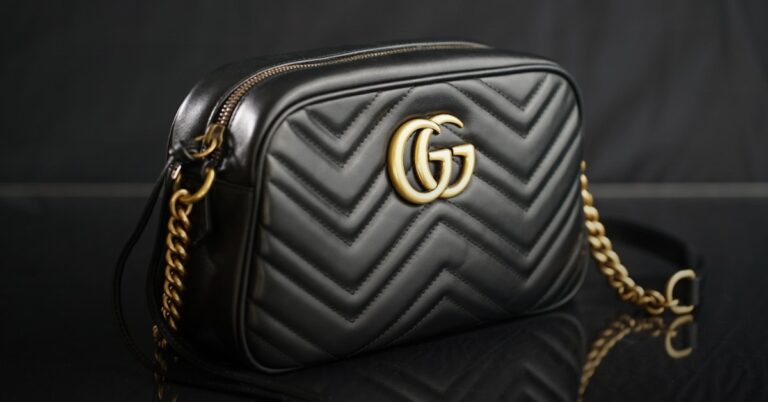

The secondary market for fine jewelry and luxury accessories has become one of the most active categories for Bitcoin settlement. Unlike the watch market — where the secondary ecosystem is dominated by a handful of large specialist dealers — the jewelry secondary market is more fragmented: resellers, estate specialists, auction houses, and a growing number of authentication-first platforms all operate in parallel, and the best Bitcoin acquisition paths depend heavily on the category.
This guide covers four categories — Hermès, Cartier, Van Cleef & Arpels, and the broader luxury accessories market — and maps the acquisition process for each: where Bitcoin buyers should look, how authentication works at the relevant price tier, and how to approach settlement and documentation.
The Luxury Accessories Market and Bitcoin: Why It Works
Luxury jewelry and accessories share three structural characteristics that make them well-suited to Bitcoin settlement. First, the secondary market is already accustomed to privacy-conscious buyers: estate jewelry, vintage Cartier, and resale Hermès have long attracted buyers who prefer transactions that do not involve financial institution intermediaries. Second, the asset class is genuinely portable — a $50,000 Hermès Birkin or $30,000 Cartier Love bracelet stack is a wearable asset that crosses borders as a personal effect. Third, and most importantly for Bitcoin holders, these assets have demonstrated price appreciation that has held through both luxury market corrections and crypto bear markets.
The common thread across all luxury accessory categories is that authorised retail channels — Hermès boutiques, Cartier flagships, Van Cleef & Arpels stores — do not accept Bitcoin. All Bitcoin acquisitions of luxury accessories are made through the secondary market: resale platforms, estate specialists, and auction house private sales.
Hermès: The Scarcest Asset in Luxury
The Hermès Birkin is not simply a handbag. It is an asset class with supply and demand characteristics more closely resembling fine art or investment-grade wine than a fashion accessory. Hermès controls production with extraordinary discipline, distributes through a relationship-gated boutique network, and has never discounted. The secondary market premium for a new Birkin 30 in Togo leather with gold hardware — typically retailing at approximately $11,000 through the boutique, for buyers who can access the allocation system — runs between 50% and 150% depending on leather, colour, and hardware configuration. Exotic skins (Nilo crocodile, Porosus) trade at multiples of that.
For Bitcoin buyers, the acquisition path is exclusively through the secondary market. The reseller ecosystem has matured considerably: Fashionphile, Rebag, Madison Avenue Couture, and Christie’s auction house private sales now all have Bitcoin infrastructure or OTC desk arrangements for high-value transactions. The authentication standard for Hermès is among the most rigorous in the resale market — the stamping system (date codes, craftsperson codes, leather type identifiers) combined with AI authentication tools (Entrupy, Real Authentication, Authenticate First) creates a verification infrastructure that sophisticated buyers rely on to confirm authenticity before any consideration changes hands.
The portfolio case for Hermès is compelling: the Birkin has outperformed the S&P 500, gold, and the broader luxury market across every measured time horizon over the past 35 years. Exotic skin Birkins in particular have appreciated 14.2% annually over the 10-year period ending 2024. For Bitcoin holders treating a Hermès acquisition as portfolio diversification, the non-correlation with digital asset prices is the primary argument.
For our complete guide to the Hermès secondary market, authentication process, and Bitcoin settlement mechanics, see: Buying a Hermes Birkin with Bitcoin: The Definitive Guide.
Cartier: The Jeweller with the Deepest Secondary Market
Cartier occupies a unique position in the luxury jewelry market: it is simultaneously one of the world’s most recognised luxury brands and one of the most liquid on the secondary market. The Cartier Love bracelet — the 18-karat gold bangle with its distinctive screw motifs — is the most traded secondary market piece of fine jewelry in the world by volume. The Panthère de Cartier in its watch form, the Tank Louis Cartier, and the Juste un Clou (Just a Nail) bracelet all have deep secondary market liquidity that makes pricing transparent and acquisition straightforward.
The four-tier Cartier market — iconic core pieces (Love, Juste un Clou, Panthère), timepieces, high jewellery, and estate/vintage — each has distinct characteristics for Bitcoin buyers. The iconic core pieces have the deepest secondary market depth, the most price transparency, and the widest range of dealers with verifiable Bitcoin infrastructure. High jewellery — significant stone pieces from Cartier’s Haute Joaillerie collections — typically requires private sale channels and OTC settlement at the price points involved ($50,000–$500,000+).
Authentication standards for Cartier in the secondary market centre on hallmarks: the maker’s mark, metal purity stamp, and reference number that Cartier uses consistently across all pieces. For significant stone pieces, independent gemological certification (GIA, SSEF) is standard practice. The resale ecosystem for Cartier is well-developed: Gray & Sons, Bezel (for watches), Fashionphile, and Christie’s Private Sales all have Bitcoin settlement capability.
Our full guide covers the complete acquisition process, all five verified resellers with Bitcoin infrastructure, and the OTC loan structure for Bitcoin holders who want USD liquidity against their Cartier position: Buying Cartier Jewelry with Bitcoin: The Definitive Guide.
Van Cleef & Arpels: The Collector’s Maison
Van Cleef & Arpels occupies a different market position than Cartier. Where Cartier has its immediately recognisable mass-luxury pieces, Van Cleef’s reputation rests on the Alhambra — a clover-motif necklace and bracelet line introduced in 1968 that has become one of the most consistently demanded pieces in the secondary luxury market — and on its extraordinary high jewellery work, which regularly appears at the top estimates in major auction house sales.
The Alhambra in mother-of-pearl is the reference piece: a 20-motif long necklace currently retails at approximately $6,600 through Van Cleef & Arpels boutiques, where allocation is heavily managed through clienteling relationships. On the secondary market, it trades at a modest premium to retail — approximately $7,000–$9,000 in excellent condition — which makes it one of the more accessible entry points in investment-grade luxury jewelry for Bitcoin buyers. The appreciation trajectory is steady: the Alhambra has delivered 5–8% CAGR on secondary market prices over the past decade.
Authentication for Van Cleef requires attention to construction details that distinguish genuine pieces from the sophisticated reproductions the brand attracts: the precision of the setting work, the quality of the coral/carnelian/malachite/onyx inlays, the depth and clarity of the engraving on clasps and hallmarks. Authenticate First, Real Authentication, and a small number of specialist estate jewellers with Van Cleef expertise are the reliable authentication resources.
For the full guide to the Van Cleef secondary market, authentication standards, and six-step Bitcoin settlement process: Buying Van Cleef & Arpels with Bitcoin: The Definitive Guide.
Verified Resellers with Bitcoin Settlement Infrastructure
| Reseller | Crypto Accepted | Categories | Last Verified |
|---|---|---|---|
| Fashionphile (fashionphile.com) | Bitcoin, ETH via BitPay | Hermès, Chanel, Louis Vuitton handbags; Cartier, VCA jewelry | May 2026 |
| Rebag (rebag.com) | Bitcoin, ETH | Hermès specialist; also Chanel, Louis Vuitton | May 2026 |
| Madison Avenue Couture (madisonavenuecouture.com) | Bitcoin via OTC arrangement | Hermès specialist — deep exotic skin inventory | May 2026 |
| Christie’s Private Sales (christies.com) | ETH, USDC for private sales | High jewellery, significant Hermès, estate Cartier/VCA | May 2026 |
| Gray & Sons (grayandsons.com) | Bitcoin via BitPay | Cartier, VCA, luxury watches | May 2026 |
Authentication: The Non-Negotiable Before Any Bitcoin Transaction
Authentication in luxury accessories is not optional at any price point above approximately $5,000. The reproduction market for Hermès, Cartier, and Van Cleef is sophisticated enough that visual inspection alone — even by experienced buyers — is insufficient. The authentication ecosystem has responded: Entrupy uses microscopic optical analysis and machine learning to identify genuine Hermès leather; Real Authentication provides certification for a wide range of luxury brands; Authenticate First specialises in Cartier and Van Cleef.
For pieces with significant gemstones — diamonds, sapphires, rubies, emeralds — independent gemological certification from GIA, SSEF, or Gübelin is the standard that sophisticated buyers require before any transaction. A GIA certificate specifying the 4Cs (cut, colour, clarity, carat) protects the buyer at resale and is increasingly required by any auction house or high-end reseller as a condition of consignment.
The authentication cost is a negligible fraction of the transaction value and should be treated as a mandatory line item in any acquisition budget, not an optional expense.
The Bitcoin Settlement Process for Luxury Accessories
The settlement mechanics for luxury accessories follow the same logic as luxury watches, with one additional consideration: condition documentation. A Birkin is a wearable object; its condition — leather suppleness, hardware patina, interior cleanliness, corner wear — materially affects its secondary market value and must be documented photographically before any Bitcoin consideration is released.
The standard process: (1) identify the specific piece and confirm authentication; (2) agree price and payment terms with the dealer in writing; (3) receive and review the authentication certificate and condition photographs; (4) arrange Bitcoin settlement — direct wallet address for transactions under $30,000, OTC desk arrangement for transactions above that threshold; (5) confirm receipt of the piece and verify condition against pre-sale documentation; (6) retain all documentation (dealer receipt, authentication certificate, photographs, transaction record).
Tax Considerations for Bitcoin-Funded Accessory Purchases
Luxury accessories — handbags, jewelry, and fashion accessories — are classified as collectibles for US federal tax purposes when sold. The implication is a 28% maximum tax rate on long-term gains when you eventually sell, compared to the 15–20% long-term capital gains rate that applies to most other assets. This is the same treatment as fine art, wine, and antiques.
The Bitcoin disposal itself — using Bitcoin to acquire the piece — is a taxable event. The gain is calculated as the fair market value of the accessory received, minus your Bitcoin cost basis. Specific Identification accounting (selecting the highest-cost-basis Bitcoin for disposal) minimises the gain. For a full breakdown of US and international tax treatment across all luxury categories, see our Crypto-Luxury Tax Guide.
Further Reading
- Buying a Hermes Birkin with Bitcoin: The Definitive Guide
- Buying Cartier Jewelry with Bitcoin: The Definitive Guide
- Buying Van Cleef & Arpels with Bitcoin: The Definitive Guide
- Luxury Fashion Brands That Accept Cryptocurrency
- The Vetted Index: 96 Verified Luxury Brands That Accept Bitcoin
- The Crypto-Luxury Tax Guide