
There are 128 Four Seasons hotels and resorts across 47 countries. Every one of them operates at a level of operational precision that a private equity analyst would recognize as institutional: trained staff ratios that exceed five employees per room in flagship properties, kitchen brigades that source independently of central procurement, and guest intelligence systems that surface the same preferences — pillow firmness, preferred newspaper, arrival temperature — across every property in the portfolio. For the crypto-affluent traveller, this consistency is exactly what makes Four Seasons the right answer to a question the brand itself rarely answers publicly: can a Bitcoin holder settle a booking without converting to fiat?
The answer, at select properties and through the correct booking channel, is yes. Four Seasons Hotels and Resorts does not process cryptocurrency directly from a public checkout page — there is no “Pay with BTC” button at the end of a fourseasons.com reservation. What exists instead is the concierge-to-concierge path: a private settlement channel available to guests who engage the property’s private travel coordination team before arrival, allow sufficient lead time for settlement mechanics, and operate through their own OTC desk or private client banking relationship. For guests already comfortable with institutional crypto settlements, the mechanics are familiar. For those who are not, the Four Seasons concierge team is equipped to facilitate the introduction to an appropriate settlement partner.
This guide covers the settlement path in detail, identifies the properties where the concierge-to-concierge model has the deepest precedent, and provides the framework a Bitcoin holder needs to plan and execute a Four Seasons booking at any tier — from a long-weekend villa to a multi-week private residence engagement at a flagship island resort.
Why Four Seasons, and Why Now
The luxury hospitality market has been slower than real estate, aviation, or automotive to formalize crypto settlement. The reasons are institutional: hotel operating agreements, franchise structures, and the settlement timelines typical of group rate contracting all create friction that doesn’t exist in a direct asset purchase. Four Seasons is different from most of its peer set in one important respect — it operates the majority of its flagship properties under management agreements, which means the operating company retains the discretion to accommodate private settlement arrangements that fall outside standard OTA checkout flows.
The second reason Four Seasons matters more in 2026 than it did in 2022 is the composition of its guest profile. The properties that attract the highest concentration of crypto-affluent guests — Bora Bora, Maldives Landaa Giraavaru, George V in Paris, the Surf Club in Miami, the Punta Mita resort on Mexico’s Pacific Coast — are the same properties that appear consistently in the booking histories of family offices managing significant digital asset positions. That overlap is known to the Four Seasons private travel team, and it is why the concierge-to-concierge pathway exists.
Third: Four Seasons private residences. Beyond hotel stays, Four Seasons operates a portfolio of branded private residences that can be purchased outright — an entirely different transaction, handled under the real estate acquisition framework covered separately on this site. The residences at Four Seasons Anguilla, Four Seasons Napa Valley, and the Four Seasons Private Residences in Bangkok, Dubai, and São Paulo are all subject to the same crypto settlement mechanics applicable to any high-value real estate purchase: OTC conversion, title company, escrow, and jurisdiction-specific tax treatment. The hotel stay and the real estate purchase are two distinct processes with different lead times and counterparties.
The Properties: Where Concierge-to-Concierge Works Best
While any Four Seasons property with a dedicated private travel coordinator can in principle facilitate a crypto settlement discussion, certain properties have developed deeper precedent and more practised internal protocols. The following five represent the clearest starting points for a Bitcoin holder planning a Four Seasons engagement.
Four Seasons Resort Bora Bora
The Bora Bora property is the entry point most commonly referenced in the context of crypto bookings at Four Seasons, primarily because its typical transaction size — overwater bungalow suites running from $2,500 to $8,000 per night, with full-villa engagements for multi-week stays reaching $200,000+ — creates the natural minimum that makes private settlement economics viable. The property’s concierge team handles a disproportionate volume of private charter coordination, yacht integration, and bespoke itinerary management. The infrastructure for complex, non-standard settlement discussions is already in place. A 10-night overwater villa engagement at Bora Bora, fully inclusive, falls solidly within the range where the concierge team will engage a crypto settlement conversation without hesitation.
Four Seasons Resort Maldives at Landaa Giraavaru
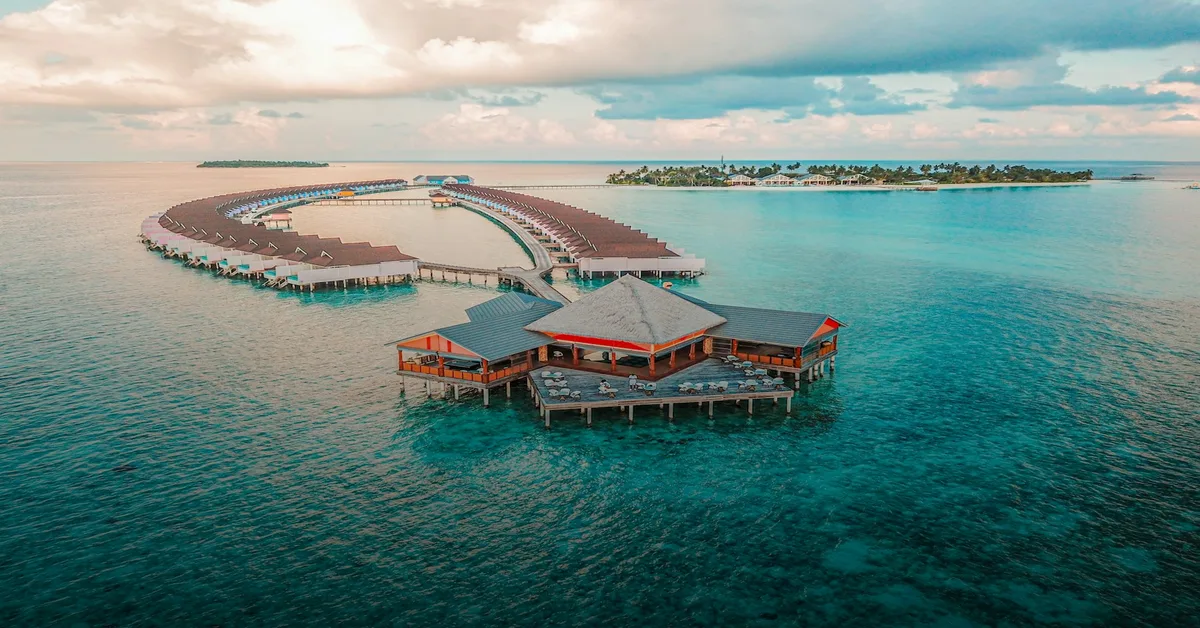
Landaa Giraavaru is Four Seasons’ most extensive Maldivian property — 103 villas and bungalows across a UNESCO Biosphere Reserve atoll, with a marine biology program that has become one of the most cited natural science initiatives in luxury hospitality. Villa rates begin at approximately $2,000 per night for garden-facing overwater villas and ascend to $22,000+ per night for the Muraka — a two-level underwater villa that is genuinely one of the most extraordinary accommodations in the world. The Muraka, at this price point, is by definition a private settlement engagement. Its bookings involve the property’s Private Events and Residences coordinator as a matter of course, and that coordinator is the correct entry point for crypto settlement discussions at this property.
Four Seasons Hotel George V, Paris
The George V represents the urban flagship case: a city hotel operating at the highest tier of Parisian luxury, with three Michelin-starred dining, a spa rated among the finest in Europe, and suites that accommodate extended corporate stays, family residences, and diplomatic engagements with the same operational ease. The George V’s concierge team — rated the best hotel concierge operation in France by Les Clefs d’Or for multiple consecutive years — handles private settlement for art purchases, real estate transactions, and legal matters as a routine part of its service model. Extending that capability to crypto settlement for extended stays or suite reservations is a natural adjacency. An ultra-suite booking of 10+ nights at the George V, at rates exceeding €10,000 per night, is the correct threshold for initiating the concierge conversation.
Four Seasons Resort and Residences Punta Mita
Punta Mita is Mexico’s premier private peninsula resort community, and Four Seasons operates the flagship hotel and villa inventory within it. The crypto-affluent cohort is disproportionately represented among Punta Mita’s repeat guest profile — the combination of Mexican legal structures that permit direct crypto-denominated private real estate transactions, proximity to the US without the domestic settlement complexity, and an operational culture on the peninsula that is already comfortable with non-standard financial arrangements makes Punta Mita one of the more crypto-progressive Four Seasons environments. Villa rentals on the property range from $5,000 to $25,000 per night; extended stays in the private residences section are structured as bespoke negotiations.
Four Seasons Hotel at the Surf Club, Miami Beach
The Surf Club is the most directly relevant Four Seasons property for the US-based crypto holder. Located in Surfside, Miami Beach — in the same geography where the luxury real estate market has been the most aggressive adopter of crypto settlement in the United States — the Surf Club operates in an environment where every adjacent professional service (real estate broker, title company, private banker, family office) is already fluent in crypto settlement mechanics. The property’s private events team facilitates extended residential stays for guests coordinating concurrent real estate transactions in the area. Rate tiers begin at approximately $1,800 per night for bay-view suites and reach $18,000+ for penthouse-level accommodations.
The Settlement Mechanics: How the Concierge-to-Concierge Path Works
The concierge-to-concierge model is not a formal payment processing system. It is a private coordination pathway that has developed organically at luxury hospitality properties serving ultra-high-net-worth guests. The following five-step framework reflects how this process typically operates at a Four Seasons property for a Bitcoin-denominated booking.
Step 1: Direct Engagement — No OTA
The starting point is a direct call or email to the property’s Private Travel Coordinator or Private Events and Residences team — not a booking through fourseasons.com, Expedia, or any OTA. The Four Seasons global reservations line (+1 800 819 5053) can connect you to the correct contact at any property, but the most efficient path is a direct email to the property’s private client address, which can be obtained from the property page on fourseasons.com. Your introduction should identify the nature of the stay, the approximate budget envelope, the preferred currency of settlement, and your preference for a direct settlement discussion with the property’s financial or operations team.
Step 2: Lead Time — Minimum Four Weeks
Private settlement at this level requires internal routing through the property’s finance team and, in some cases, its management company’s treasury function. Four weeks is the practical minimum; eight weeks is the comfortable timeline for a large booking. This is not unique to Four Seasons — any luxury hospitality property accommodating a non-standard settlement is navigating internal approval chains, and the lead time reflects the institutional diligence the property must perform, not a reluctance to accommodate.
Step 3: OTC Desk or Private Client Banking Introduction
In most cases, the settlement is not made directly from the guest’s wallet to the property. The Four Seasons treasury function requires fiat receipt — the crypto conversion is handled upstream by the guest’s OTC desk, private client banking team, or a designated intermediary. The OTC desk (Kraken OTC, Coinbase Prime, Galaxy Digital’s institutional desk, or an independent licensed OTC broker) executes a block trade from the guest’s position and wires the fiat equivalent to the Four Seasons property account or its designated treasury. The guest’s total BTC exposure at settlement is crystallized at the OTC execution price, which creates a taxable disposal event under US IRS rules (and equivalent frameworks in most jurisdictions). The property receives fiat; the guest’s OTC desk provides the settlement confirmation; the booking proceeds.
An alternative structure — available to guests with relationships at private banks including Anchorage Digital, Ledn, or similar crypto-native lending platforms — is to use a Bitcoin-collateralized loan to generate the fiat required for the booking. The BTC is locked as collateral; the loan proceeds are wired to the property. The guest retains the BTC position (which continues to appreciate if the asset rises) and services the loan from other liquidity. This is the most tax-efficient structure for a guest with a low-basis BTC position, because the loan does not trigger a disposal event. The Crypto Luxury Tax Guide on this site covers this structure in full detail.
Step 4: Confirmation and Deposit Structure
Once settlement terms are agreed with the property, the deposit structure mirrors what any ultra-high-net-worth guest would expect: typically 30–50% on booking confirmation, with the balance due 30 days prior to arrival or at check-in, depending on the property and the booking type. For villa engagements and private residence stays, the deposit schedule is negotiated as part of the booking agreement. All terms should be confirmed in writing by the property’s Private Travel Coordinator.
Step 5: On-Property Experience — No Visible Difference
Once the settlement is executed and the booking is confirmed, the on-property experience is identical to any other Four Seasons stay at that price point. Room preferences, dietary restrictions, activity bookings, and service requests are coordinated through the property’s guest relations team using the Four Seasons guest intelligence platform. The settlement method is invisible to the on-property operations team — it is a treasury-level detail that has already resolved before arrival. The guest arrives as a confirmed reservation holder and is treated accordingly.
What to Expect: A Property-by-Property Rate Reference
The following rate ranges reflect publicly available pricing as of June 2026 and are indicative rather than guaranteed — Four Seasons rates fluctuate with season, availability, and negotiated terms for extended stays. These figures establish the planning horizon for OTC desk sizing.
| Property | Room Tier | Nightly Rate Range | Minimum Viable BTC Booking |
|---|---|---|---|
| Bora Bora | Overwater Suite → Private Villa | $2,500 – $8,000+ | 7-night villa: $50,000+ |
| Maldives (Landaa Giraavaru) | Overwater Villa → Muraka | $2,000 – $22,000+ | 5-night villa: $35,000+ |
| George V, Paris | Deluxe Suite → Ultra-Suite | €3,500 – €18,000+ | 7-night suite: €60,000+ |
| Punta Mita | Casita Suite → Private Villa | $1,800 – $25,000+ | 7-night villa: $40,000+ |
| Surf Club, Miami | Bay Suite → Penthouse | $1,800 – $18,000+ | 5-night penthouse: $40,000+ |
Four Seasons Private Residences: The Ownership Layer
Beyond the hotel stay, Four Seasons operates one of the most extensive branded private residence portfolios in luxury hospitality — more than 50 residence projects across six continents, with a development pipeline that continues to expand in crypto-progressive jurisdictions. For the Bitcoin holder who wants long-term Four Seasons access without coordinating a settlement conversation before every trip, the private residence ownership model is the answer.
Four Seasons Private Residences are purchased as titled real estate — freehold or long-term leasehold depending on jurisdiction — with hotel services available à la carte or as part of a managed rental program. The purchase transaction follows the same crypto real estate mechanics documented in the Bitcoinionaire guide to Miami luxury real estate and the broader Real Estate Transaction Blueprint: OTC conversion or crypto-native escrow platform, title company, jurisdiction-appropriate AML documentation, and standard real estate closing mechanics. The Four Seasons brand sits on top of the real estate infrastructure; it does not change the settlement fundamentals.
Current Four Seasons Private Residence development projects with documented crypto-progressive jurisdiction profiles include Four Seasons Napa Valley (California — complex state tax treatment but strong escrow infrastructure), Four Seasons Anguilla (British Overseas Territory — zero capital gains tax for qualifying buyers, direct freehold ownership), and Four Seasons Private Residences Bangkok (Thailand — long-term leasehold, increasing institutional OTC infrastructure). Each of these requires direct engagement with the development’s sales team and a qualified local real estate attorney before any settlement discussion.
Tax Treatment: The Disposal Event Framework
Every crypto-to-fiat conversion executed to fund a Four Seasons stay is a taxable disposal event under US IRS rules, and under equivalent frameworks in the UK (HMRC), Australia (ATO), Canada (CRA), and most EU member states. The tax liability is calculated on the difference between the asset’s cost basis (acquisition price) and the fair market value at the time of disposal (OTC execution price). The applicable rate depends on the holding period: short-term (held under 12 months) is taxed at ordinary income rates of up to 37%; long-term (held over 12 months) is taxed at the preferential capital gains rate of 0%, 15%, or 20% depending on total taxable income.
The bitcoin-collateralized loan structure avoids the disposal event entirely, as described in Step 3 above. The Crypto Luxury Tax Guide covers cost basis methods (FIFO, HIFO, Specific Identification), international tax comparisons, and documentation requirements for luxury hospitality transactions specifically. For bookings above $50,000, a consultation with a qualified tax advisor who holds both crypto and international tax expertise is a non-negotiable part of the pre-booking process.
Vetted Property Profile
| Detail | Four Seasons Hotels and Resorts |
|---|---|
| Founded | 1960, Toronto |
| Properties | 128 hotels and resorts, 50+ private residence projects |
| Headquarters | Toronto, Canada |
| Official Website | fourseasons.com |
| Crypto Acceptance | Via concierge-to-concierge settlement at select flagship properties |
| Currencies Accepted | BTC, ETH (OTC conversion to fiat required — property receives fiat) |
| Settlement Path | OTC desk or BTC-collateralized loan → fiat wire to property treasury |
| Minimum Viable Booking | ~$35,000+ extended stay (practical threshold for private settlement engagement) |
| Booking Contact | Property Private Travel Coordinator (direct; not OTA or fourseasons.com public checkout) |
| Last Verified | June 2026 — confirm settlement availability directly with property before booking |
Frequently Asked Questions
Not through the standard fourseasons.com checkout. Crypto settlement at Four Seasons is handled through a private concierge-to-concierge pathway, where the guest’s OTC desk converts Bitcoin to fiat and wires the proceeds to the property treasury. Contact the property’s Private Travel Coordinator directly, with a minimum four-week lead time, to initiate this conversation.
Bora Bora, Maldives Landaa Giraavaru, George V Paris, Punta Mita, and the Surf Club Miami Beach have the deepest precedent for high-value private settlement arrangements. These properties handle the most complex guest financial coordination and are best positioned to facilitate a crypto settlement discussion. That said, any flagship Four Seasons property with a Private Travel Coordinator can initiate the conversation.
There is no formal minimum published by Four Seasons. In practice, the private settlement pathway is designed for extended stays and villa-level bookings, where the total booking value exceeds $35,000. For shorter stays or lower-cost room categories, a standard fiat payment is the more practical approach. The OTC settlement process has fixed coordination costs that only make sense above a meaningful transaction threshold.
Yes. The OTC conversion from Bitcoin to fiat is a disposal event under US IRS rules (and equivalent frameworks in most other jurisdictions), subject to capital gains tax on the difference between cost basis and market value at execution. The exception is the Bitcoin-collateralized loan structure, where no disposal occurs — the BTC is pledged as collateral and the loan proceeds are used to fund the booking. Consult a qualified crypto tax advisor before executing a large settlement.
Yes, subject to the standard crypto real estate settlement mechanics: OTC conversion or crypto-native escrow platform, title company, AML documentation, and jurisdiction-specific closing requirements. Four Seasons Private Residences are titled real estate transactions. The Four Seasons brand operates on top of the real estate structure and does not change the settlement fundamentals. Contact the development’s sales team and a qualified local real estate attorney before proceeding.
A Bitcoin-collateralized loan allows you to pledge BTC as collateral (typically 50–70% loan-to-value ratio) and receive a fiat loan equivalent. The loan proceeds are wired to the Four Seasons property as payment. No BTC is sold, so no disposal event occurs. The BTC position remains in the collateral wallet and appreciates or depreciates with the market. Platforms offering this structure include Ledn, Anchorage Digital, and Unchained Capital. Interest rates and LTV ratios vary by platform and market conditions.
Further Reading
- Staying at Soneva Fushi with Bitcoin: The Maldives’ Most Extraordinary Resort
- Staying at Aman Resorts with Bitcoin: The Definitive Guide
- Buying Luxury Real Estate in Miami with Bitcoin: Developer, Escrow, and Title
- The Crypto Luxury Tax Guide: What You Owe When You Pay in Bitcoin
- The Vetted Index: 100 Verified Luxury Brands Accepting Cryptocurrency
- Staying at the Burj Al Arab with Bitcoin: The Definitive Guide
- Staying at The Ritz-Carlton Maldives with Bitcoin: The Definitive Guide
- Crypto-Friendly Michelin-Star Restaurants: Where to Dine on Bitcoin