
Aviation · Ownership Guide
Buying a Private Jet with Bitcoin: The Ownership Playbook
Charter is a product. Fractional is a subscription. Ownership is a different asset class entirely — and the path to paying for it in Bitcoin is more institutionalized than most buyers realize. This is the complete ownership guide: the aircraft categories, the dealers, the OTC settlement mechanics, the ownership structure, and the tax layer that separates a well-executed BTC-funded acquisition from an expensive mistake.
Charter vs. Fractional vs. Ownership: The Asset Class Distinction
Most introductions to private aviation begin with the question of which aircraft. The correct question is which structure. Charter, fractional, and ownership are not products on a price spectrum — they are fundamentally different relationships to an asset, with different economics, different tax treatments, different operational requirements, and different returns on capital.
Charter is capacity consumption. You pay for occupied hours; the aircraft is someone else’s asset and someone else’s problem. Fractional — NetJets, Flexjet, Wheels Up — is a hybrid: you own a share, typically one-sixteenth or one-eighth of a specific aircraft or aircraft type, and pay management and hourly fees. Ownership is different in kind. You hold a depreciable capital asset, you control its availability and configuration, you bear its maintenance and operating costs, and you make all decisions about its use — including whether it is available for charter through a management company that turns the asset into a partial income producer.
For a crypto-affluent principal with eight-figure net worth and a regular flying programme of 200 hours or more per year, ownership typically produces better economics than fractional at year three or four of the holding period. The break-even point is mission-dependent; the editorial desk recommends a formal aviation finance analysis before any acquisition above $5 million.
Aircraft Categories: From Light to Ultra-Long-Range
Light Jets ($3M–$8M new)
The Cessna Citation CJ4 ($10.6M new) and Embraer Phenom 300E ($10.9M new) represent the current light jet benchmark. Range: 1,900–2,200 nautical miles. Cabin: 6–8 passengers. Ideal mission: US domestic, Europe intra-regional. Operating costs: $700,000–$1,100,000 annually. Pre-owned examples of the Phenom 300 are available from $5M–$8M and are frequently the entry point for first-time jet owners. Last Verified: May 2026.
Midsize Jets ($8M–$16M new)
The Cessna Citation XLS+, Bombardier Learjet 75 Liberty, and Hawker 900XP occupy the midsize category with range extending to 2,500–2,900 nautical miles. Stand-up cabins in the XLS+ category make transatlantic segments viable with one fuel stop. Pre-owned inventory is substantial and liquid.
Super-Midsize Jets ($16M–$30M new)
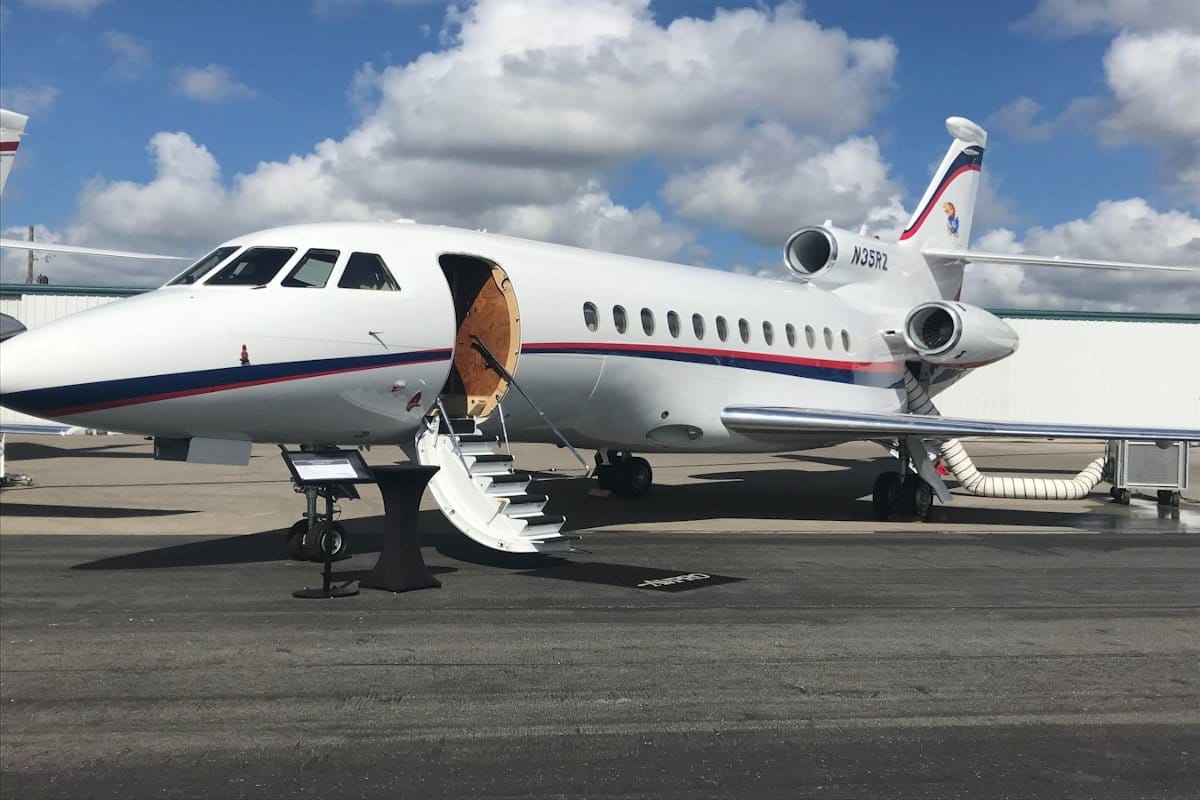
The Citation Latitude, Challenger 350, and Falcon 2000S are the workhorses of the ultra-high-net-worth fleet. Range: 3,200–4,000 nautical miles. Full stand-up cabin with galley. The Challenger 350 is the most-sold aircraft in its category globally. Pre-owned Challenger 350s are available from $15M–$22M.
Large Cabin Jets ($25M–$55M new)
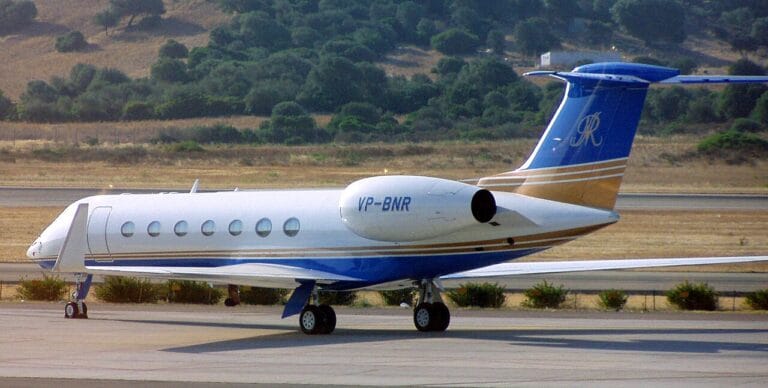
The Bombardier Challenger 650, Dassault Falcon 7X, and Gulfstream G550 offer intercontinental range (4,500–6,750 nautical miles) with full stand-up cabins, enclosed lavatories, and crew rest areas. The G550 is the most liquid aircraft in its category on the secondary market.
Ultra-Long-Range Jets ($55M–$85M+ new)
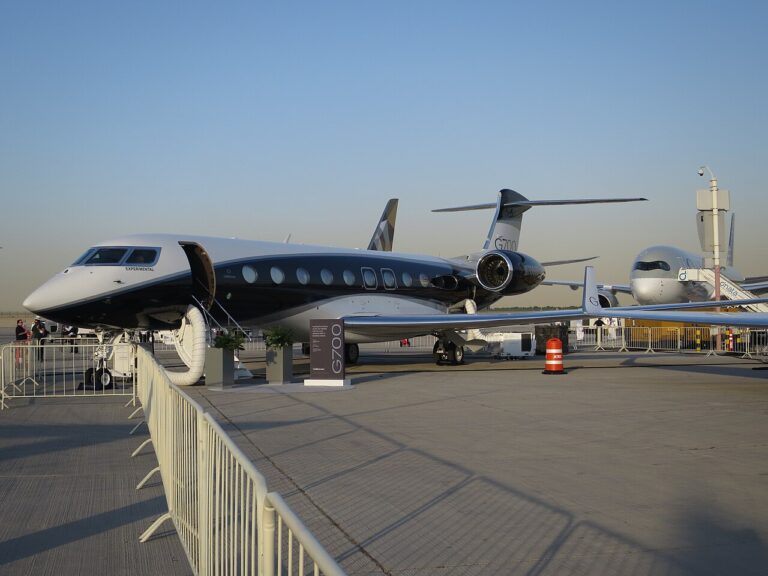
The Gulfstream G700 (~$78M), Bombardier Global 7500 (~$75M), and Dassault Falcon 10X (~$80M) represent the current state of the art. Range: 7,000–8,000+ nautical miles. Nonstop New York to Tokyo, London to Sydney with one technical stop. Four-zone cabins. Full-size master suites. These aircraft are transacted in Bitcoin with regularity. See our dedicated Gulfstream G700 guide for the complete acquisition path.
Verified Dealers: Who Facilitates BTC-Funded Aircraft Transactions
Last Verified: May 2026.
Aviatrade (Morristown, NJ) — confirmed Bitcoin transactions across Gulfstream, Bombardier, Embraer product lines. BTC, ETH, USDC, USDT.
Jetcraft — world’s largest aircraft dealer by transaction volume. BTC, USDC by arrangement.
The Jet Business (London) — foremost European brokerage, Swiss/Liechtenstein escrow structures. BTC, ETH, USDC.
Leviate Air Group (Dallas) — BTC by arrangement, full acquisition-to-management service.
Mente Group (Dallas) — rigorous pre-buy inspection protocols, BTC, ETH by arrangement.
Settlement Mechanics
The standard structure: the buyer transfers BTC to a qualified aviation escrow agent (Insured Aircraft Title Service, Aero-Space Reports, McAfee & Taft) who maintains digital asset custody capability. On closing day, the escrow agent converts through an OTC desk (Cumberland, Galaxy Digital, Falcon-X) at a pre-agreed rate. The resulting wire releases to the seller simultaneously with title transfer and delivery.
The purchase agreement for a BTC-settled aircraft transaction specifies: the originating wallet, the escrow wallet, the OTC counterparty, the rate-fixing window, and fallback provisions for settlement-day price dislocations exceeding ±5%.
Ownership Structure
Most private jets at the ultra-high-net-worth level are held in a Delaware LLC or Cayman Islands special-purpose vehicle. The entity takes title, holds the aircraft as a business asset, provides liability segregation and privacy, and accommodates the accounting for a BTC-funded acquisition in a clean and auditable way.
For US-based buyers who intend to use the aircraft for business travel, the entity ownership structure enables accelerated depreciation treatment — bonus depreciation under Section 168 and Section 179 expensing — that can meaningfully offset the federal capital gains triggered by the BTC disposal at closing.
The Tax Layer
Using appreciated Bitcoin to purchase an aircraft constitutes a taxable disposal. For US buyers, it also triggers potential Federal Excise Tax (FET) of 7.5% on domestic charter revenue if the aircraft is placed on a Part 135 charter certificate. Mitigations: entity-level ownership, bonus depreciation (up to 100% in the first year for qualifying property), Section 1245 recapture planning, and timing the acquisition to coincide with tax-loss harvesting in the BTC portfolio. A private-aviation CPA — Crowe LLP’s aviation practice, Holland & Knight, Shackelford Bowen — should be retained at the LOI stage.
Annual Operating Costs by Category
| Light Jet | $700K–$1.1M/year |
| Midsize Jet | $1.0M–$1.5M/year |
| Super-Midsize | $1.4M–$2.0M/year |
| Large Cabin | $2.0M–$3.5M/year |
| Ultra-Long-Range | $3.5M–$5.0M/year |
All pricing and dealer acceptance claims verified by Bitcoinionaire editorial desk, April 2026. Aircraft prices fluctuate with market conditions; confirm with dealers directly.