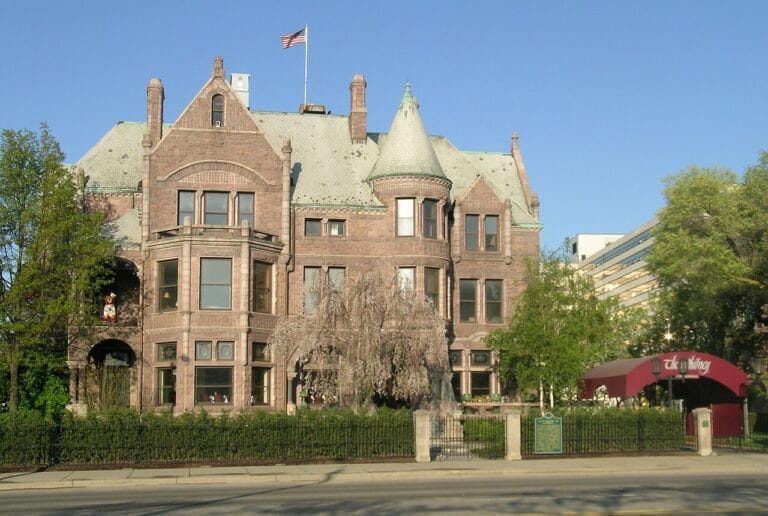

Fine art gallery - luxury paintings and art purchasable with Bitcoin

Buying Fine Art with Bitcoin: Gallery, Auction, and Private Sale

Art & Design · Flagship Guide

The art market and Bitcoin have more in common than most people realise. Both operate on discretion. Both reward those with relationships over those with simply money. And both have quietly moved toward each other over the past several years. Pace Gallery accepts Bitcoin. Christie’s built an entire auction programme for crypto-settled transactions. Private sales — the dominant channel for eight-figure acquisitions — are structurally the most compatible format for BTC-funded deals the market has ever produced.

The Gallery Channel: Verified Galleries Accepting Bitcoin

Last Verified: May 2026.

Pace Gallery

Pace Gallery (New York, London, Hong Kong, Geneva, Seoul, Los Angeles) is one of the world’s premier contemporary art galleries, representing artists including Alexander Calder, Agnes Martin, Lucas Samaras, and Kaws. Pace confirmed Bitcoin acceptance for physical works and became the first major blue-chip gallery to publicly formalize a crypto payment policy. Transactions are structured through the gallery’s institutional OTC arrangement; the buyer does not need to handle the conversion themselves. Settlement: BTC. Last Verified: May 2026.

Artsy Dealer Network

Artsy is the world’s largest online art marketplace, connecting buyers with galleries and dealers across 190+ countries. A growing number of Artsy-listed galleries accept cryptocurrency for works listed on the platform. The inquiry process is conducted through Artsy’s messaging system; the gallery’s payment terms — including crypto acceptance — are confirmed at the point of inquiry. Settlement: varies by gallery; confirm at inquiry stage.

Working with a Private Art Adviser

For acquisitions above $250,000, working through a private art adviser — rather than directly with a gallery — is standard practice in the upper segment of the market. An experienced adviser with digital-asset literacy will know which galleries can accommodate crypto settlement without raising compliance concerns, which estates are open to Bitcoin-funded private transactions, and how to structure the escrow so both parties are protected through authentication and shipping.

The Association of Professional Art Advisors maintains a directory of vetted advisers. When interviewing candidates, ask specifically about prior experience with cryptocurrency-funded acquisitions, their relationship with an art escrow provider, and their familiarity with the tax treatment of crypto-funded collectibles in your jurisdiction. An adviser who answers fluently has done this before.

The Auction Channel: Christie’s 3.0 and Sotheby’s Metaverse

The two dominant houses have both built infrastructure for digital-asset transactions, but in importantly different ways — understanding the distinction matters before placing a bid with the expectation of crypto settlement. The landmark March 2021 sale of Beeple’s Everydays: The First 5000 Days — $69.3 million, payable in Ether — established Christie’s as the first major auction house to transact in digital currency. That sale is real and correctly dated, but it did not become a standing facility: Christie’s wound down the digital-art department that ran its on-chain programme in 2025, and the payment methods it enumerates today do not include cryptocurrency. Last Verified: August 2026.

Christie’s 3.0

Christie’s built a dedicated on-chain platform — Christie’s 3.0 — to capture the digital art and crypto-native collector market, and it did accept Ethereum and USDC for NFT lots sold through it. Two things about it matter to a buyer today. First, it was built for digital art: it was never a payment route for a canvas, a watch or a piece of jewellery. Second, Christie’s wound down the digital-art department that ran it in 2025, folding digital works into its 20th and 21st Century Art category. For the physical art market, private sale remains the most flexible channel on terms — but Christie’s enumerated payment methods, being cards, PayPal, pay by bank and bank transfer, do not include cryptocurrency, and the house declines third-party payments. Convert to fiat before you settle. Crypto acceptance: Unverified — no first-party statement of a crypto route for physical works. Last Verified: August 2026.

Sotheby’s Metaverse

Sotheby’s Metaverse is the auction house’s dedicated platform for digital and crypto-native art, accepting BTC, ETH, USDC, and USDT for works sold through the platform. For physical works at Sotheby’s traditional sales, the house accepts cryptocurrency through its private sale department for significant transactions where both buyer and consignor agree to the settlement terms.

Registration and Source-of-Funds

Whether bidding online, by telephone, or in person, registration at either house requires government-issued ID, proof of address, and — for bids above roughly $1 million — source-of-funds documentation. For crypto-funded purchases, that package should include records of where the cryptocurrency was acquired (exchange statements, mining records, or inheritance documentation), its acquisition date, and its conversion path to the intended transaction. Both houses maintain compliance teams experienced with blockchain-based source-of-funds packages; preparing the documentation with an attorney before registration reduces friction and positions the buyer as a serious bidder for high-value lots.

Private Sales: The Most Compatible Channel for Bitcoin-Funded Acquisitions

Private sales — transactions conducted directly between a collector and a gallery, auction house private sale department, or specialist art adviser — account for the majority of transactions above $5 million in value. They are conducted without public price discovery, without the time pressure of an auction, and without the bidding competition that drives auction premiums beyond rational valuation. They are also the most structurally compatible channel for Bitcoin-funded acquisitions.

Major private-sale opportunities flow through four channels: gallery advisory relationships, the auction houses’ own private-sale departments (both Christie’s and Sotheby’s maintain substantial private-sale inventories), independent art advisers who broker between collectors, and direct collection-to-collection introductions through shared advisers or institutional networks.

The 5-step private sale escrow process for a Bitcoin-funded acquisition:

Step 1 — Adviser engagement. Retain an independent art adviser or use the auction house’s private sale specialist. Adviser fees run 5 to 10 percent of the acquisition price or a negotiated retainer.

Step 2 — Work identification and valuation. The adviser identifies works matching the collector’s criteria. For significant acquisitions, an independent appraisal from a certified appraiser is obtained.

Step 3 — Due diligence. The work is searched against the Art Loss Register. Provenance documentation is reviewed. Authentication is confirmed through the relevant catalogue raisonné or expert committee where applicable.

Step 4 — Escrow and payment. An art escrow agent (typically a specialist art law firm — Sotheby’s Institute, Burns & Levinson’s art law practice, or Herrick Feinstein’s art group) holds both the agreed purchase price — converted from BTC to USD at the agreed rate — and the signed bill of sale until conditions are satisfied.

Step 5 — Title transfer. Upon confirmation of payment, the bill of sale is released, title transfers to the buyer, and the physical work is transported to the buyer’s designated storage or display location.

Authentication, Insurance, and Storage

Authentication. For secondary market works, authentication through the relevant catalogue raisonné or artist foundation is the gold standard. Works by living artists acquired through galleries come with gallery certificates of authenticity.

Insurance. Specialist fine art insurers — Chubb, AXA Art, Hiscox — provide agreed-value policies that pay the insured amount without depreciation in the event of loss or damage.

Storage. For works not on active display, professional art storage at a climate-controlled facility — Crozier Fine Arts, Uniart, Hasenkamp — provides institutional-grade care. The Geneva Freeport is the world’s most significant art storage facility for high-value works where ownership may span jurisdictions; it offers both physical security and certain tax advantages for non-EU buyers.

The US Tax Layer: Capital Gains on BTC + 28% Collectibles Rate

Buying art with appreciated Bitcoin triggers two simultaneous US tax events: the Bitcoin disposal (taxed as capital gains on the appreciation) and the future art sale (taxed at the 28% collectibles rate under US federal law, higher than the standard 20% long-term capital gains rate). This dual tax layer is material and must be planned for before the acquisition closes.

The international comparison is stark: Germany imposes a 12-month exemption on Bitcoin gains (long-term BTC held over one year is tax-free); Switzerland has no capital gains tax on either Bitcoin or art for private collectors; Singapore and UAE impose no capital gains tax whatsoever. For collectors with flexibility on residency, these jurisdictions offer a materially different tax environment for both the acquisition and eventual sale. The UK treats art profits as capital gains at 20 percent for higher-rate taxpayers, with no equivalent of the US collectibles-rate distinction.

Art is also an estate-planning asset. High-value works held at death are included in the taxable estate at fair market value, potentially triggering federal estate tax on amounts above the exemption. Common strategies include charitable remainder trusts, donor-advised funds, and fractional gifting to family members; for collections above $5 million in aggregate value, an estate-planning attorney with art-market experience is essential.

The Strategic Frame: Where the Crypto Buyer Has an Edge

The crypto-affluent collector occupies a specific, advantageous position in the current art market. Traditional institutional collectors — family offices, corporate collections, museum endowments — move slowly and through conventional payment rails. The buyer who can move quickly, whose liquidity does not depend on equity-market conditions, and who can settle in a currency many galleries and estates find appealing as a diversification play has a genuine structural edge.

The most accessible works for a crypto buyer entering the market are not, as a rule, the blue-chip secondary lots that trade at evening sales — those are dominated by established advisers with decades of house relationships, and carry buyer’s premiums that can reach 26 percent on lower lots. The more interesting entry point, and historically the stronger return segment, is the primary market: works by artists in the decade before full critical and commercial recognition, acquired directly through gallery relationships built over time. Done well, this produces a collection that is simultaneously a coherent artistic statement and an appreciating asset.

Company Crypto-Ready Profile: Fine Art Market

Primary Galleries Pace Gallery (Bitcoin accepted)
Auction Houses Christie’s 3.0 (ETH, USDC); Sotheby’s Metaverse (BTC, ETH, USDC, USDT)
Best Channel for Bitcoin Buyers Private sale (auction house or adviser-brokered)
Due Diligence Standard Art Loss Register search + provenance documentation + authentication
Recommended Insurers Chubb, AXA Art, Hiscox
Recommended Storage Crozier Fine Arts, Uniart, Geneva Freeport
US Tax Rate on Art Sale 28% collectibles rate (federal); 0% in Switzerland, Germany (12mo+), Singapore, UAE

All gallery and auction house acceptance claims verified by Bitcoinionaire editorial desk, April 2026. Policies change; confirm directly at time of inquiry.


Frequently Asked Questions

Can you buy fine art with Bitcoin?

Yes, but not everywhere, and not at Christie’s. Pace Gallery accepts Bitcoin for physical works. Sotheby’s Metaverse accepts multiple cryptocurrencies for digital lots. Christie’s ran an on-chain platform for NFT lots (Christie’s 3.0) and wound down the department behind it in 2025; its enumerated payment methods for physical works are cards, PayPal, pay by bank and bank transfer, and cryptocurrency is not among them. Private sales — the dominant channel for eight-figure acquisitions — are often structured to accommodate Bitcoin-funded closings through qualified escrow, which converts to fiat before the seller is paid. Last verified August 2026.

How does a Bitcoin-funded gallery purchase work?

Galleries that accept Bitcoin directly receive the BTC into their custody wallet and convert through their own OTC arrangements. For galleries that prefer fiat, the buyer’s OTC desk converts BTC to USD, and the gallery receives a standard wire. In either case, the art transaction itself is unchanged — a purchase receipt and certificate of authenticity are issued on completion.

What is Christie’s 3.0 and how does it work?

Christie’s 3.0 was the auction house’s on-chain platform for digital and crypto-native art, and it accepted Ethereum and USDC for NFT lots sold through it. It was not a payment route for physical works, and Christie’s wound down the digital-art department that ran it in 2025. For physical art at Christie’s, private sale is the most flexible channel on terms, but settlement is in fiat: the enumerated payment methods are cards, PayPal, pay by bank and bank transfer. Last verified August 2026.

What are the tax implications of buying art with Bitcoin in the US?

Two tax events occur simultaneously: (1) the disposal of Bitcoin triggers capital gains tax on the appreciation; (2) the art acquired is classified as a collectible for US federal tax purposes, meaning gains on eventual art sale are taxed at the 28% collectibles rate rather than the standard long-term capital gains rate. Both tax events require advance planning.

What is Art Loss Register due diligence?

The Art Loss Register (ALR) is the world’s largest private database of stolen and looted art. Before any significant art purchase, the work should be searched against the ALR database. A certificate of search is standard practice and provides a measure of legal protection to the buyer if the work’s provenance is later disputed.